Shellfish / Crab
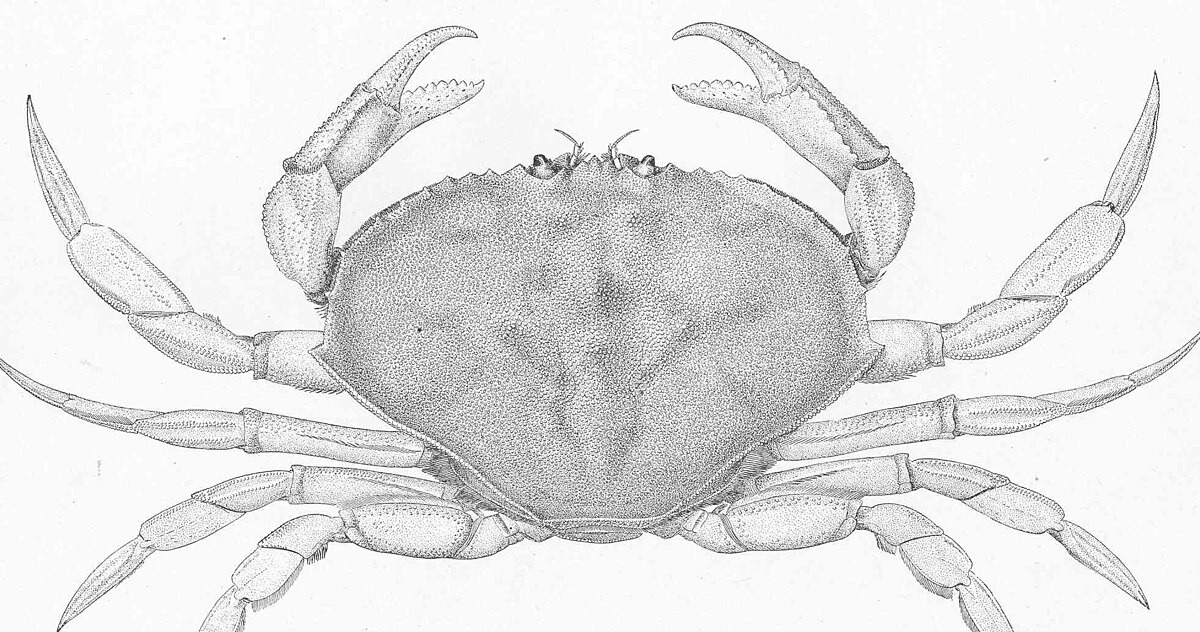
Dungeness Crab
Metacarcinus magister
Unconfirmed · ODFW report changed since our reviewODFW ↗ · shellfish · New in ODFW's report: "Always check for closures at the ODA Recreational Shellfish Biotoxin Closures page before harvesting shellfish, which includes clams, crabs and mussels. Check ODA Recreational Crab Biotoxin Harvest Status Map page before harvesting."
Peak quality
Dec–Feb
Low quality · soft-shell
Aug–Oct
- Bays, piers & jetties
- Open year-round
- Ocean · recreational
- Closed Oct 16 – Nov 30ODFW has changed this document since our record of Nov 5, 2026 · read the current rule ↗
Meat fills after the late-summer and early-fall molt; yield peaks in cold water once the new shell hardens.
live signal · Tri-state (Oregon, Washington, California) pre-season meat-yield tests (commercial opening waits for 23% picked meat), nearshore water temperature, ODFW season alerts, monthly landings. (sourced)
Plate No. 026 · Finley & Bohlman
Managed harvest · check current rules
Release females, males under 5¾ in. across the shell and soft-shell crab, gently and in the water.
Rules · Oregon Marine Zone
Dungeness crab
- Daily limit
- 12, males only
- Terms
- 5¾ in. minimum across the back, in front of the points; 3 rings, lines or pots per person
- Season
- Bays, beaches, estuaries, tide pools, piers and jetties: all year. Ocean: closed Oct 16 – Nov 30
- Shellfish license
- Required at 12 and older to take shellfish or other marine invertebrates
About
Crab with a broad reddish-purple shell and white-tipped claws. Bays, estuaries, piers and jetties are open year-round; the ocean closes Oct 16–Nov 30. Limit: 12 males a day, at least 5¾ in. across the shell. Shells are soft after the Aug–Oct molt and fill with meat by Dec–Feb. Lookalike: red rock crab, which has black claw tips.
Conditions: Slack water (the turn of the tide, little current). Crabbing score: high-tide slack 1, low-tide slack 0.85.
We like to wait until they're ready with the best possible meat fill before we open up the season.
Field notes
Catching it
Set pots or rings on the bottom near the channel in Yaquina, Tillamook, Nehalem or Netarts; bait with chicken, mackerel or shad.
Judging quality
From late summer through early fall the bay is full of soft-shell crab: newly molted crab that are watery and light. Keep the hard-shell crab that have not molted. The signs, in order of reliability: heft (a full crab is heavy for its size; an empty one feels hollow), squeeze (press the shell or the back of a leg: a hard one gives nothing, a soft one flexes), shell wear (old hard shells look scuffed and dark, often barnacled; a fresh molt is clean and bright) and the belly plate (firm and yellow-stained when full, white and pliable when fresh).
Molt & fill
Males shed their shells to grow, mostly late summer into fall (roughly Aug–Oct on the Oregon coast). Over the following weeks the new shell hardens and fills with meat, peaking in winter: meat fill climbs from ~15–20% of shell weight just after molt to 25% or more by winter.
Tides
Crab move and feed most around slack water (the turn of the tide, when the current eases), coming up off the bottom to forage. The rising (incoming) tide brings saltier water up the bay. Fish the last of the incoming tide and the slack at the top. Spring tides (the month's largest) run hard and drag gear; neap tides (the smallest) are easier to fish. Set pots along the channel edge and leave them in through the tide change.
Salinity
Dungeness want salty water; heavy rain and river flow drop bay salinity and push crab toward the mouth or out to the ocean, and feeding stops in the upper bay. Big-river bays (Tillamook's five rivers, the Alsea) turn fresh fast after storms. After a big rain, fish the lower bay on the incoming tide, where the heavier salt water lies along the bottom.
Area weather
A calm, dry high-pressure spell in winter gives flat water to fish and no freshwater flush. A big storm brings dangerous conditions on the bar (the shallow river-mouth crossing) and jetties, and a fresh, muddy bay for days after.
ID & lookalikes
Red rock crab has black claw tips and is legal year-round with no size or sex limit. The invasive European green crab has five spines beside each eye; kill it, never return it to the water and report it to ODFW.
Licensing
Oregon shellfish license required (age 12+, ~$10/yr). Confirm current Oregon Department of Fish and Wildlife (ODFW) rules for dock and boat crabbing.
Catch rules
Males only, at least 5¾ in. across the shell (measured just in front of the side spines); 12 a day. Return females and softshells. Recreational crabbing is open year-round in the bays and estuaries; the ocean is closed to all crabbing Oct 16–Nov 30. Confirm the bay is open with ODFW before you head out.
Commercial vs recreational
The commercial fishery is a large ocean fishery opening near Dec 1 (delayed some years pending meat-quality testing), worked with hundreds of pots per boat; it supplies the market. Its opening date has no bearing on recreational crabbing in the bays.
Preparation
Cook live in heavily salted boiling water 12–15 min, or clean-and-cook (back off, gut out) for sweeter, less briny meat. Ice immediately. Serve with drawn butter and lemon.
Where to find it
Stewardship
Live feeds
Gear and reading
Some links are affiliate links: the almanac earns a commission on purchases through them, at no extra cost to you. Local makers are listed without shop links.
Sources
Shared tide and weather feeds: see Live feeds.
Agency / authority
ODFW Crabbing & Clamming: Marine Zone report · Recreational CRAB open/closed + the Oct 16–Nov 30 ocean closure; port-by-port.
Event
Physical data
NOAA CO-OPS Tides & Currents API · Tides, minus-tide clamming windows, Yaquina water temp. Stations: Yaquina 9435380, Garibaldi 9437540, Netarts 9437262, Nehalem 9437908.
6-min obs; preds years ahead · No key. Filter lows < 0.0 ft for minus tides. Water-temp product discontinued after 2024 at many stations.
NOAA NDBC buoy 46050 (Stonewall Bank) · Wave height/period, wind, sea-surface temp: bar-crossing / boat-crab safety go-no-go.
~10-min · Plain text, no key. Best nearshore proxy (20 NM W of Newport). Code for 'MM' missing.
Enthusiast / secondary
Marvin's Guide: Oregon Crabbing Report · Bay-by-bay crab counts + meat-fullness %: a quality signal no agency provides.
Periodic · Scrapeable, no paywall. Freshness past Dec 2024 unconfirmed; add staleness guard.
Oregon Coastal Crabbing & Shellfish (Facebook) · Real-time bay-specific keeper counts per soak: closest thing to a live abundance sensor.
Continuous · ~76k members. Login-walled, no clean API → human-in-the-loop.