Fungi / Top Tier
Fungi: Top Tier
Spring Morels
Morchella spp.
Opens Apr 1210d out
Open
Apr 1 – Jun 30
Best
May
wormy
Jun
Soil warming to ~50°F at the retreating snowline, ~1 to 3 weeks after snowmelt; first-spring burn scars flush hardest, and the front marches uphill through the season.
signal · Soil temperature ~50°F threshold, snowmelt date, elevation band. (sourced)
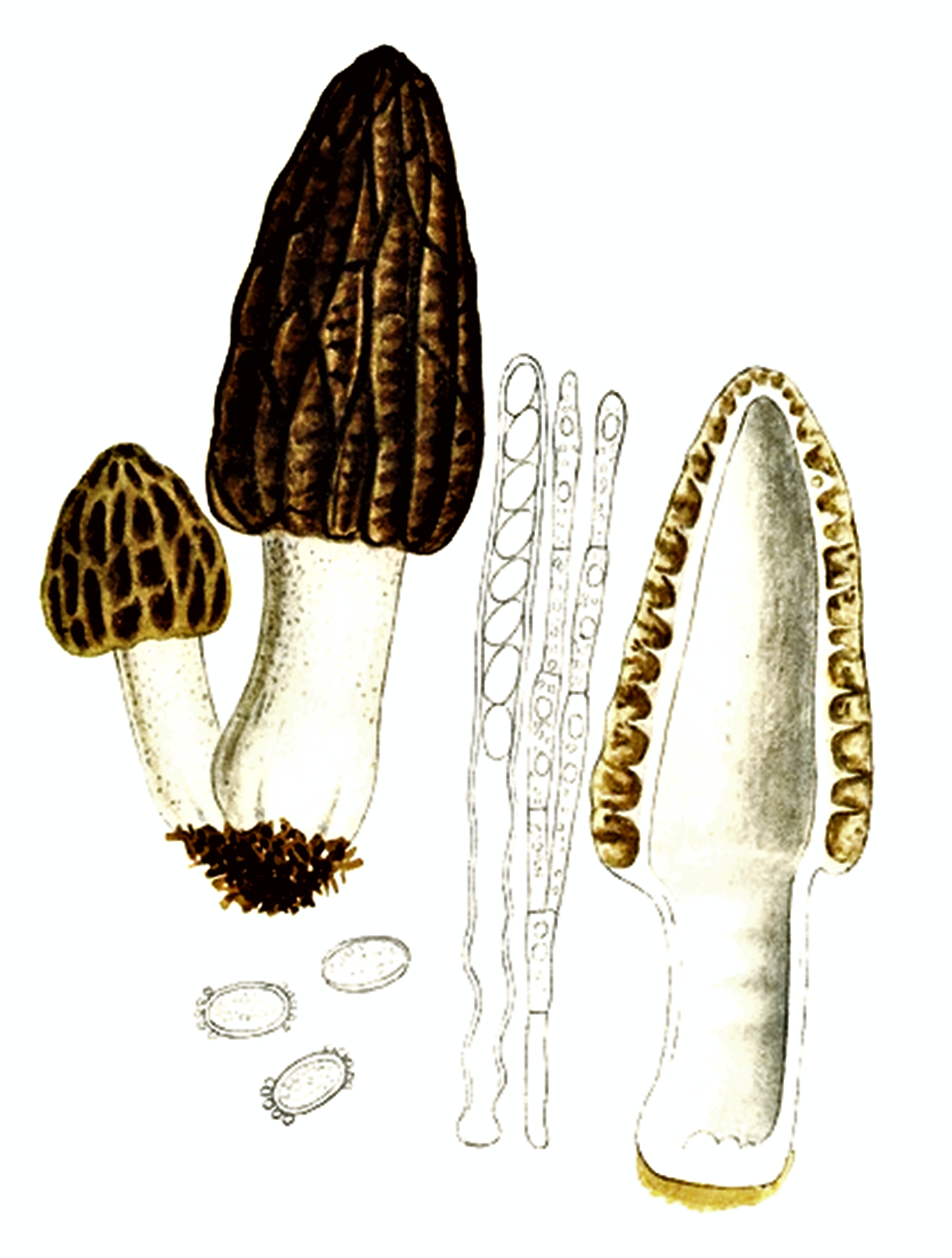
Plate No. 004 · Finley & Bohlman
Managed, mind the rules
Often a single flush after fire: take what's up and cut cleanly; little you do harms next year's crop. Stay out of closed burn units.
The read
Spring crown jewel; flushes in mountain burn scars and river valleys as snow melts.
The event: Soil hits ~50°F at burn scars as the snowline retreats.
Field notes
Finding it
Spring, 1–3 weeks after snowmelt as soil reaches ~50°F. Best in the first 1–2 years after a wildfire ('burn morels'); also cottonwood river bottoms and dying elm/ash. South-facing slopes warm first.
Judging quality
Fresh morels are firm, springy, and completely hollow when halved (confirm the ID and evict the slugs while you're in there). Pass on any that are soft, collapsing, waterlogged, or sour-smelling. Morels rot fast, and spoiled ones will turn your stomach even fully cooked. Look for a clean, pale interior; dark and wet inside means it's gone. Small, tight morels travel and keep better than big brittle ones. Never eat one raw.
ID & lookalikes
False morels (Gyromitra, Verpa) carry gyromitrin and can be lethal. True morels are completely hollow inside with the cap fully attached to the stem; false morels have cottony/chambered insides or a cap that hangs free.
Licensing
Personal use generally needs no permit on public land (~1 gal/day typical). Burn-area harvest may require a free permit and have active fire/access closures. Check the specific forest.
Catch rules
Always cook thoroughly: raw or undercooked morels are toxic, and don't pair them with alcohol the first time. Confirm true vs. false morel every time.
Preparation
Always fully cooked. Halve lengthwise to confirm the hollow interior and evict insects, soak briefly in salt water, then sauté in butter. Peerless in cream sauces. Dry to preserve; the flavor intensifies.
Where to find it
What we watch: live feeds
The Kit
what a forager carries- Gear
- Opinel No.08 mushroom knifeAmazon ↗Nisaku hori-hori trowel-knifeAmazon ↗PNWBUSHCRAFT waxed-canvas pouchmade in WAmakerExcalibur 9-tray dehydratorAmazon ↗
Some links are affiliate links; buying through them supports the almanac at no cost to you. Beloved local makers are listed without links — recommendations, not sales.
Sources
What informs Spring Morels in particular. The shared feeds it reads (tides, weather, water temp) are the live feeds above.
Physical data
NRCS SNOTEL (AWDB REST) · Soil moisture (SMS) + soil temp (STO) at depth: closest machine proxy to the fruiting trigger.
Daily / hourly · No key. High-elevation bias; Coast Range weak. Verify each site reports SMS/STO.
Citizen science
iNaturalist API · Occurrence density, flush phenology, range, photo validation. OR place_id=10; taxon_id formosus=120443.
Real-time · No key for reads; ≤10k req/day. Richest single feed for density & timing.
GBIF API · Normalized historical range + validation (taxonKey formosus=5466954).
iNat→GBIF weekly · No key for search. Pairs with iNat (iNat = freshest, GBIF = clean range).