Fungi / Forager Favorite
Fungi: Forager Favorite
Chicken of the Woods
Laetiporus conifericola
In window now~58d left
Open
Jun 1 – Oct 31
Best
Jul–Sep
over-mature
Oct
Summer heat and humidity on dead conifer wood; only the fresh growing margin is prime and it stiffens to chalky and sour within days, low elevations first then climbing uphill.
signal · Temperature, antecedent rainfall/humidity, elevation. (modeled)
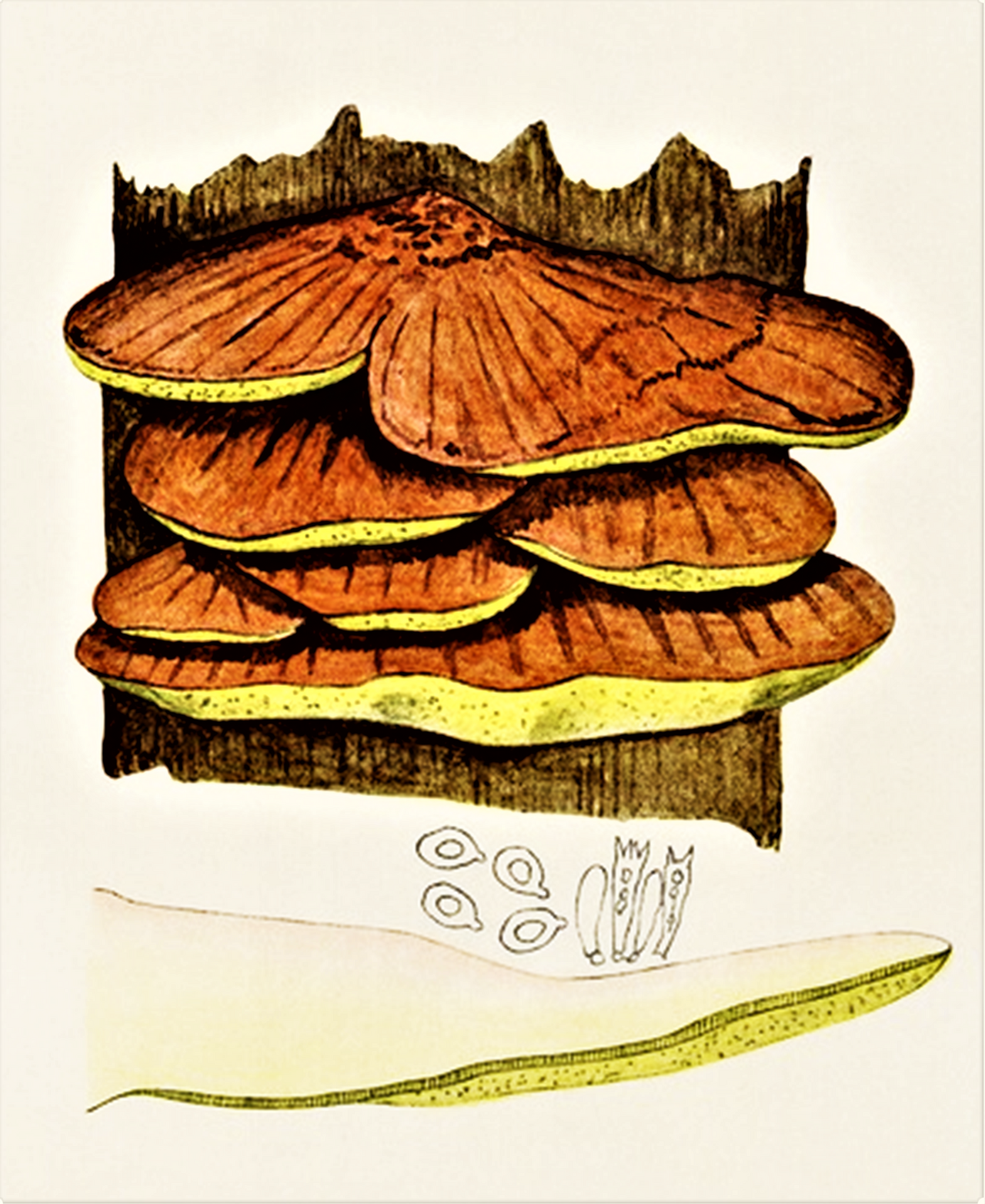
Plate No. 015 · Finley & Bohlman
Tread lightly
One log feeds for five to ten years: take only the young margins, leave the woody base, and don't strip a producing snag bare.
The read
Sulphur-and-orange shelves on dead conifers; shreddy, like white-meat chicken. One of the region's easiest finds.
The event: Summer heat on dead conifer wood; low elevations first, climbing uphill into fall.
Field notes
Finding it
A bracket on wood, not a mushroom on the ground: hunt the dead conifers, not the duff. The Oregon species (Laetiporus conifericola) takes Douglas-fir, hemlock, and spruce: standing snags from eye level to twenty feet up, big logs lying in partial sun, cut stumps five to fifteen years old, and fire-killed snags three to ten years after a burn. The overlapping orange-and-yellow shelves cluster to several pounds and glow against the forest. You'll spot one from dozens of yards. Fruiting climbs with the summer: low elevations first, up into the mountains by fall. Mark a producing log; the same wood gives for five to ten years until it's spent.
Judging quality
Only the young growth eats. The keeper is the outer two or three inches: soft, moist, and pliable, almost like thick suede, bright orange above and sulphur-yellow below, bleeding a little when cut. Once the flesh toward the tree turns chalky-white, stiff, or brittle, it's past: cut the suede edge and leave the rest. The conifer variety here upsets a small number of people. Cook it hard, and try a small portion your first time.
ID & lookalikes
Close to unmistakable, and one of the best beginner mushrooms in the region: the shelving bracket, the smooth bright-orange top, and the pored (never gilled) sulphur-yellow underside have virtually no dangerous lookalike here. Confirm the pore surface, take it from conifer, and you're on solid ground.
Licensing
Personal harvest on Oregon State Forest land (Tillamook, Clatsop) generally needs no permit; national-forest ground allows a personal daily limit. Cut the shelf, don't tear the tree.
Catch rules
Always cook it, never raw. Take only the young suede-soft margin and leave the woody base so the log keeps producing.
Preparation
Cook it through, never raw. A hard, sustained sear in a hot cast-iron pan with plenty of fat crisps the outer edges and renders the inside tender and meaty, close to the namesake. Chalky older flesh stays rubbery no matter what; use only the young margin. Freezes well cooked.
Where to find it
What we watch: live feeds
The Kit
what a forager carries- Gear
- Opinel No.08 mushroom knifeAmazon ↗Nisaku hori-hori trowel-knifeAmazon ↗PNWBUSHCRAFT waxed-canvas pouchmade in WAmakerExcalibur 9-tray dehydratorAmazon ↗
Some links are affiliate links; buying through them supports the almanac at no cost to you. Beloved local makers are listed without links — recommendations, not sales.
Sources
What informs Chicken of the Woods in particular. The shared feeds it reads (tides, weather, water temp) are the live feeds above.
No sources keyed specifically to Chicken of the Woods yet. See the fungi sources →